Safety · Kingman & Prescott · November 3, 2026
Checking Your HVAC After Flooding: A Safety Guide for Kingman and Prescott Homes
Flood water and heating systems don't mix. If water reached your furnace, heat pump, outdoor unit or ductwork during the recent storms, don't turn it back on yet. Here is how to check it safely, what to look for, and when to call us.
(928) 565-6440First things first: leave it off
If flood water got into your home, garage, crawlspace or yard, the safest thing you can do for your heating and cooling system is nothing at all until it has been checked. Don't flip the thermostat to see if it works. A furnace, heat pump or air handler that sat in water can short out, damage its own controls, or in the worst case create a fire or gas hazard the moment it gets power.
If you can reach your electrical panel without standing in water, switch off the breaker for the furnace or air handler and the breaker for the outdoor unit. If the panel itself was flooded, or you have to stand in water to reach it, stay away and let a licensed electrician or the utility handle it.
What just happened in Kingman and Prescott
It has been a wet fall in our part of Arizona. On October 11, a flash flood warning covered Kingman after heavy rain from the remnants of Tropical Storm Rachel, and residents in Kingman, Valle Vista and Fort Mohave reported flooding damage to their properties. Then on Sunday, November 1, heavier than forecast rain hit Prescott hard enough that Watson Lake Dam overtopped and the city declared a state of emergency, according to the City of Prescott. Creeks and washes across Yavapai County ran high for days.
Plenty of homes got water in places it never goes: garages where the water heater and furnace live, crawlspaces full of ductwork, and outdoor condensers sitting on low pads. If that's you, here is what we'd want you to know before you turn anything back on.
Gas furnaces and water heaters
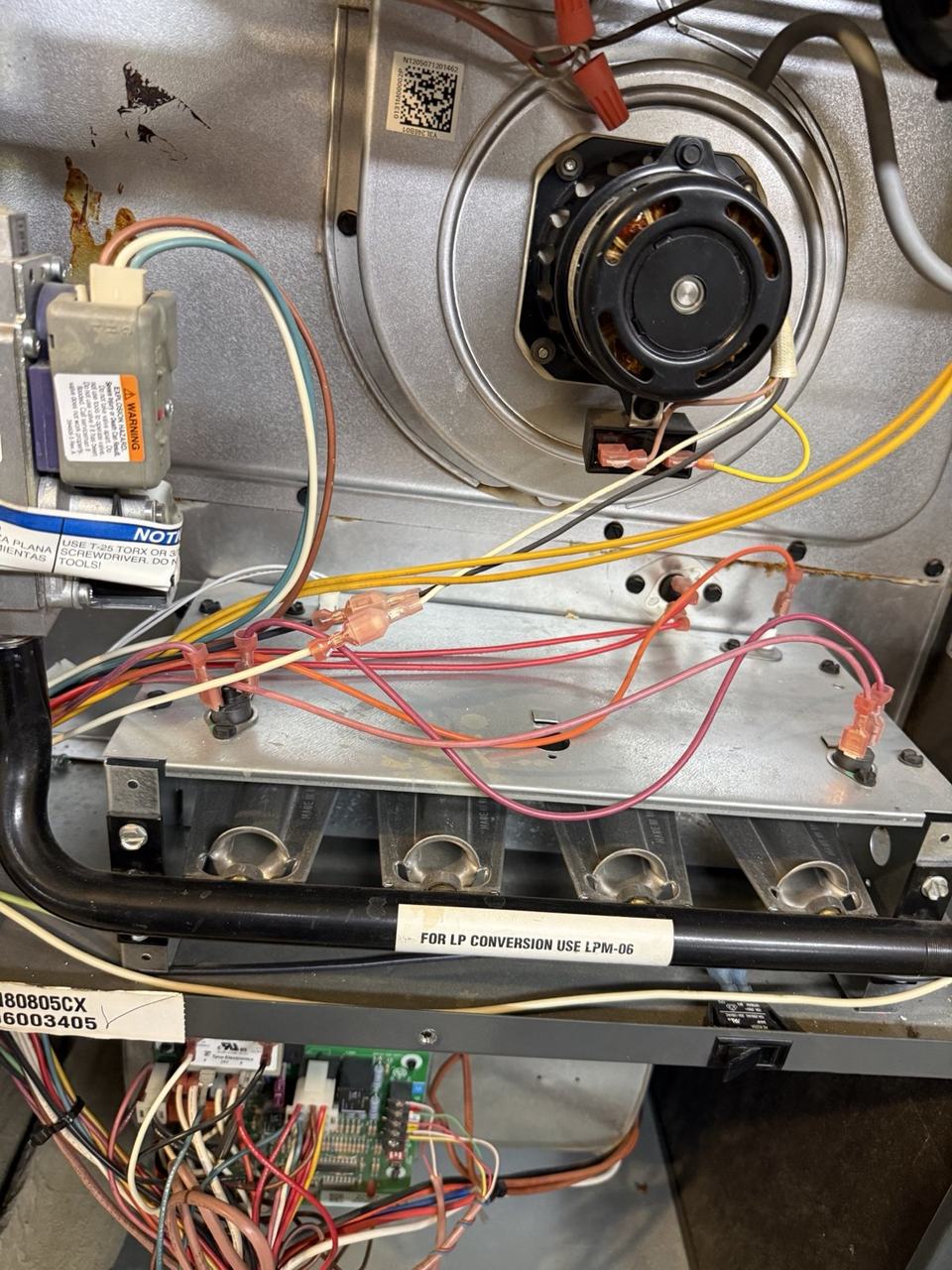
Gas equipment that has been underwater needs a professional before it runs again. The parts at the bottom of a furnace (the gas valve, the ignitor, the flame sensor, the control board and the inducer motor) are exactly the parts flood water reaches first. A gas valve that has been submerged can stick or leak, and safety controls that got wet may not shut the burners off when they should. The same goes for a gas water heater.
- Smell gas? Get everyone out. Don't use light switches, phones or anything that could spark inside. Call your gas utility or 911 from outside.
- Propane tank moved or tipped? Floods can shift tanks and stress the lines. Close the tank valve if you can do it safely and call your propane supplier.
- Don't relight a pilot yourself on equipment that was in water. Let a technician inspect it first.
- Check your carbon monoxide alarms. Replace batteries now. And never heat the house with a gas oven, grill or generator indoors while you wait on repairs.
In most cases, a furnace's gas valve and electrical controls that were submerged should be replaced rather than dried out and reused. Sometimes that's a repair. Sometimes it makes more sense to replace the furnace. We'll tell you which, and why.
Heat pumps, air handlers and electrical parts
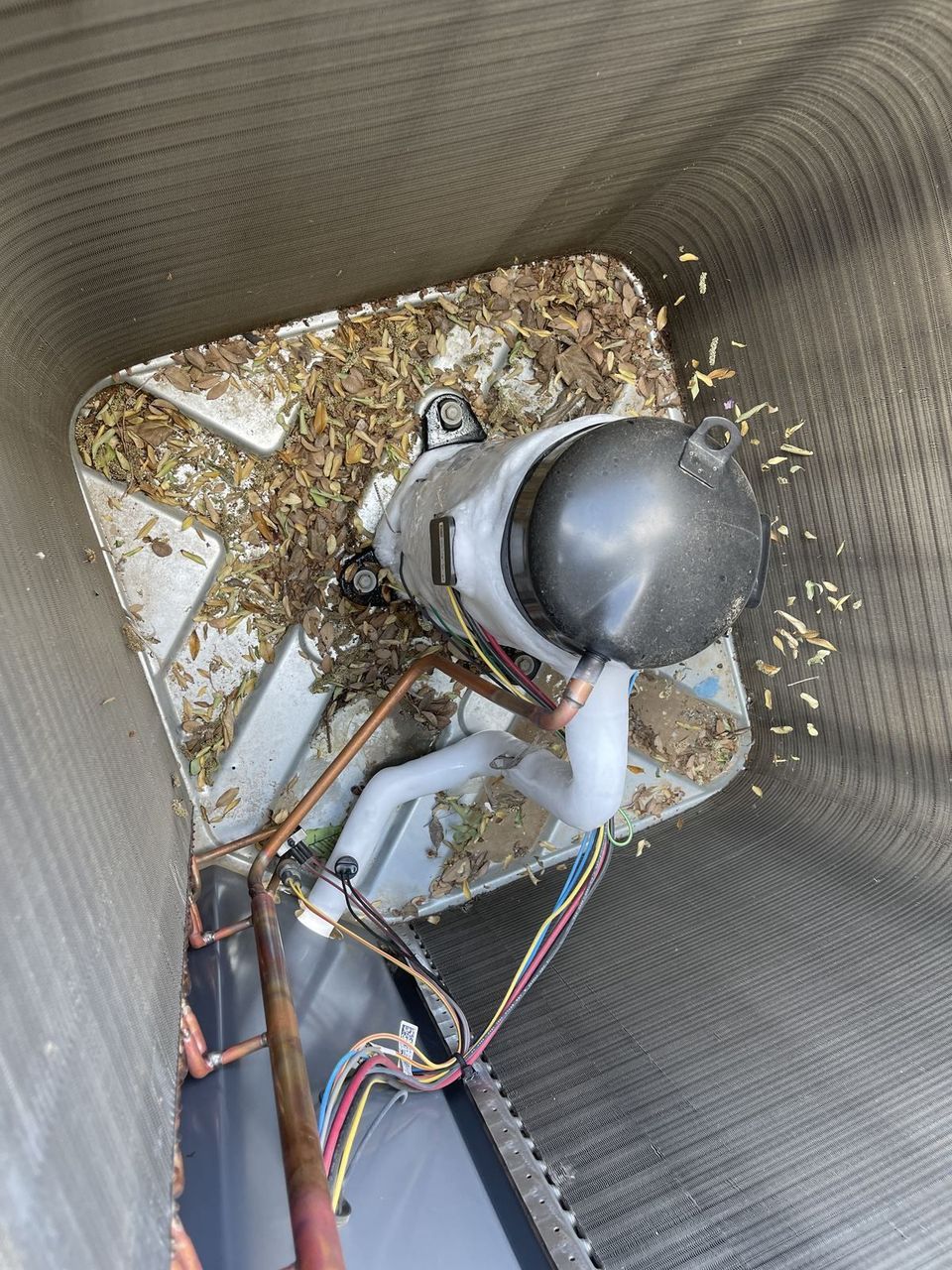
Electric equipment has its own risks. Water and mud get into the control board, the blower motor, the capacitor and the wiring connections. Even after it looks dry, corrosion keeps working on those parts for weeks. If you have a heat pump or electric furnace, the backup heat strips sit in the air handler and draw a lot of power. Wet strips and wet wiring are a real fire risk.
If you heat with a heat pump and it's cold at night, use safe temporary heat while you wait on an inspection: a plug-in space heater placed well away from anything flammable, plugged straight into a dry wall outlet, not an extension cord.
The outdoor unit
Condensers and heat pumps sit outside and are built to handle rain. They are not built to sit in moving flood water. After the water goes down, walk out and take a look without touching it:
- Is the unit still level on its pad, or did the water shift or tip it? A unit that moved can stress or crack the refrigerant lines.
- Is there mud, sand or debris packed into the coil fins or piled against the sides?
- Did water get into the electrical disconnect box on the wall next to it?
- Can you see a water line or silt on the cabinet above the base?
If the answer to any of those is yes, keep it off and have it checked. Mud in the coil chokes airflow, and a wet contactor or capacitor can fail the first time the unit tries to start. Don't hose out the electrical compartment yourself. Rinsing light mud off the coil from the outside, with the power off, is fine.
Ductwork and mold
This is the part people miss. Flood water isn't clean rain water. It carries mud, sewage and bacteria, and anything it soaks holds onto that. Ducts that sat in water spread it through the house the first time the blower runs.
- Flex duct in crawlspaces and ductwork under manufactured homes (in the belly wrap) are the most likely to have been in water. Wet flex duct and duct insulation usually need to be replaced, not cleaned.
- Metal ductwork that stayed above the water line can often be inspected, cleaned and sealed.
- Mold can start growing within a day or two on anything that stays wet. If you smell a musty odor from the vents once the system is running again, call us.
- Change the air filter once the system is cleared to run. A filter that got damp or dusty during cleanup is done.
If you've got mud or moisture in the ducts, our air quality and duct services page covers what we do to get the air in your house clean again.
Photos first, then cleanup
Before anything gets hauled to the curb, document it. It makes the insurance conversation a lot easier.
- Take wide photos of each piece of equipment where it sits, plus close-ups of the water line or silt marks on the cabinet and nearby walls.
- Photograph the model and serial number plate on the furnace, air handler, outdoor unit and water heater.
- Write down the date and how high the water got.
- Call your insurance company before you approve a replacement. Many standard homeowners policies don't cover flood damage, and flood insurance has its own process.
When we inspect flood-damaged equipment, we take photos and write down what we find, so you have something to hand your adjuster.
When to call a pro
Call before you power up if any of these are true:
- Water touched the furnace, air handler, water heater or outdoor unit.
- The ducts in a crawlspace or under a manufactured home were in water.
- You smell gas, burning or a musty odor from the vents.
- Breakers trip when the system tries to start.
- The outdoor unit moved, tipped or is packed with mud.
We'll check the gas valve and controls, the electrical, the blower, the outdoor unit and the ducts, then tell you straight what can be saved and what can't. You get the service call price on the phone before we head out. Learn more about our heating repair work, or if the system is too far gone, our furnace and heat pump replacement options. For storm prep before the next one, see monsoon season HVAC tips for Mohave County.
Common questions
Can I turn my furnace back on after it was in flood water? Not until it has been checked. If water reached the gas valve, control board, burners or blower motor, those parts can fail in unsafe ways even after they look dry. Leave the system off at the breaker and have a licensed HVAC technician inspect it first.
How high does water have to get before my HVAC system is damaged? On most furnaces and air handlers, the controls and gas valve sit within the first foot or two off the floor. If the water line on the wall is anywhere near the bottom of the cabinet, assume the controls got wet. Outdoor units are similar: if water rose above the base of the condenser, the electrical parts inside need to be checked.
Do my air ducts need to be replaced after a flood? Ducts that sat in flood water, like flex duct in a crawlspace or the belly of a manufactured home, usually should be replaced. Flood water carries sewage, mud and bacteria, and wet duct insulation holds it. Metal ductwork that stayed dry can often be inspected and cleaned instead.
What should I do if I smell gas after a flood? Leave the house right away, without flipping switches or using anything that could spark. From outside, call your gas utility or 911. Don't go back in until they say it's safe.
Will insurance cover my flooded HVAC system? It depends on your policy. Many standard homeowners policies exclude flood damage, while flood insurance often covers it. Either way, take photos of the equipment, the water line and the model and serial plates before anything is removed, and call your insurance company before you approve a replacement.
We're a veteran-owned company based in Kingman, serving Kingman, Golden Valley, Bullhead City, Fort Mohave and the rest of Mohave County, plus Prescott, Prescott Valley and Chino Valley. If flood water got to your heating or cooling system, call (928) 565-6440, or text (928) 227-8441 with a photo and we'll get back to you.
Stay safe out there. The Air-Exx team
Straight answers, no surprises
You'll know the price before we start.
You get the service call price on the phone, before anyone heads your way. The diagnostic is credited toward the repair when you approve it.