Heating · Prescott · November 3, 2026
Furnace Smells Like Burning? What's Normal and What Isn't in Prescott
Up in Prescott and Prescott Valley the heat is already running most nights, and the first few cycles of the season come with a smell. Most of the time it's harmless dust burning off. Sometimes it isn't. Here's how to tell the difference by what you actually smell.
(928) 565-6440Why the first run of the season smells
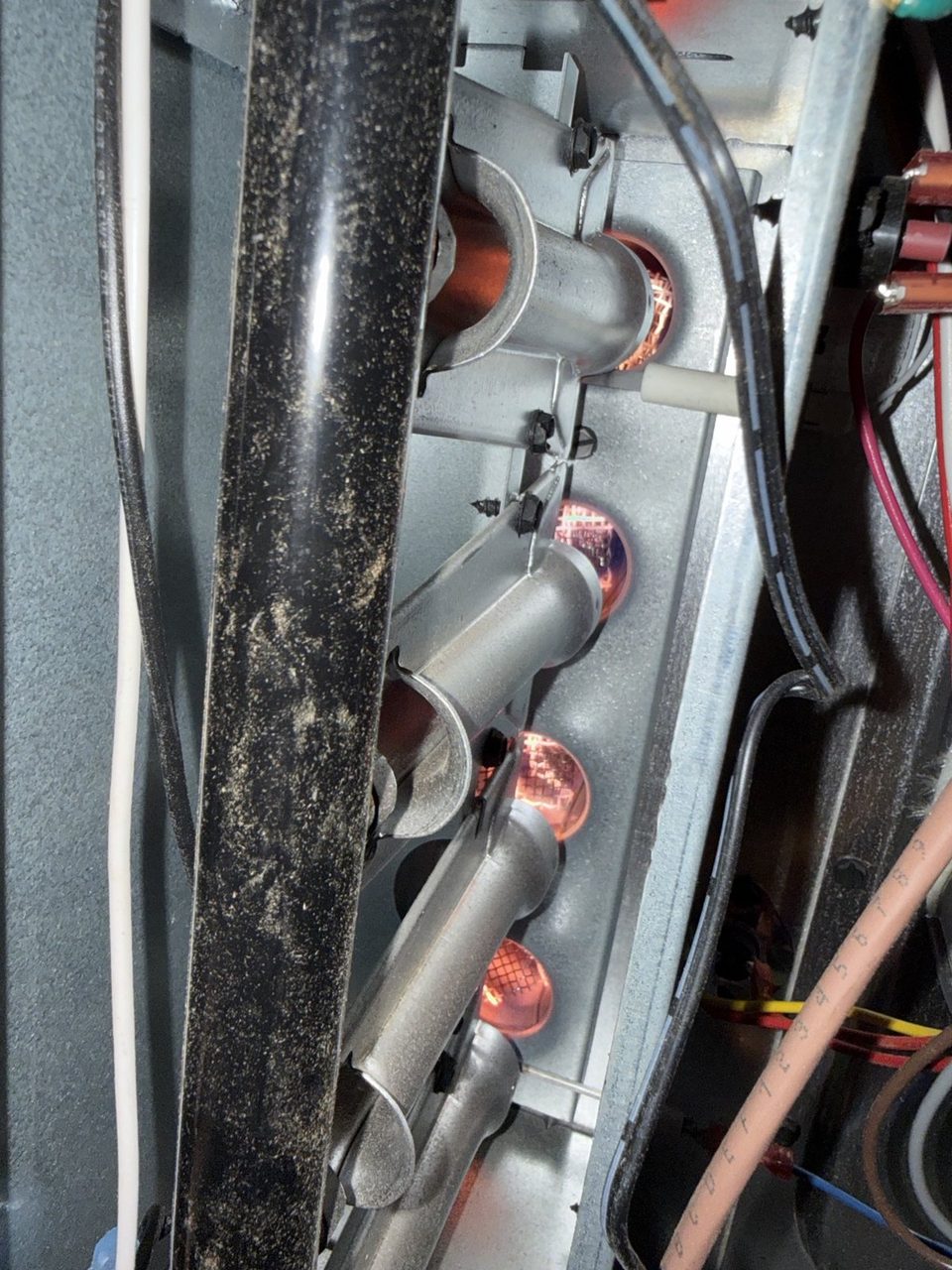
From late spring to fall, your furnace mostly sits. Dust settles on the burners, the heat exchanger and the blower, and in a lot of Prescott homes the furnace sits in an attic or garage where there's plenty of dust to settle. The first time it fires, that layer cooks off. The result is a dry, dusty, slightly burnt smell that can carry through the whole house.
That smell is normal. It should be strongest in the first few minutes, fade over the first few cycles, and be gone within about a day of normal use. Opening a window for a bit helps it clear faster.
Prescott sits at about 5,300 feet and drops below freezing on roughly a hundred nights a year, so the heat here doesn't just come on for a week. It runs for months. That's why it's worth knowing which smells are part of the routine and which ones mean shut it off.
A smell-by-smell guide
- Dusty, slightly burnt, fades quickly. Dust burning off. Normal on the first few runs of the season. If it comes back every time the heat runs all winter, the filter or the blower is probably dirty, and that's worth a look.
- Burning plastic or rubber. Not normal. Something may be touching a hot surface, or a motor or wire may be overheating. Turn the system off at the thermostat and call.
- Hot wiring or a sharp electrical smell. Not normal. Blower motors and capacitors can overheat as they wear out, and wiring connections can loosen and get hot. Shut it off and call. If you see smoke, get out and call 911.
- Rotten eggs or sulfur. That's the odor added to natural gas and propane so you can detect a leak. Get everyone outside. Don't flip switches or relight anything. Call 911 or your gas or propane supplier from outside, then call us once you're safe.
- Musty or damp. Usually moisture somewhere in the system or ducts. Not an emergency, but worth having checked, especially if you also notice it when the fan runs by itself.
- Smoke or wood smoke. If you heat with a wood stove too, a central system can pull smoke back into the house through leaky returns or a backdrafting flue. We wrote about that in our post on wood stoves and indoor air quality.
The danger you can't smell
Carbon monoxide has no odor at all. A cracked heat exchanger or a blocked flue can push it into the house without any warning smell. That's why we inspect the heat exchanger and check the venting on every heating call, and why every home with gas or propane heat should have working CO alarms. Test them now, while you're thinking about it.
What you can do before you call
- Change the filter. A dirty filter means more dust reaching the furnace, and less airflow means the furnace runs hotter. Both make the smell worse and last longer.
- Clear the furnace closet or attic platform. Boxes, paint cans and holiday decorations stored next to a furnace are a real fire risk once it starts running every night. Give it room.
- Clear the floor registers. Rugs and furniture over vents trap heat and dust. Vacuum the registers while you're at it.
- Note what you smell and when. Only on startup? Only when the blower kicks on? Every cycle? That tells a technician a lot before the panel even comes off.
What we check when the smell doesn't go away
We look at the burners and flame, the heat exchanger, the flue and venting, the blower motor and capacitor, the wiring connections and the filter. At this elevation we also check the gas valve and orifices against the manufacturer's altitude requirements, because a furnace set up for sea level doesn't burn right at 5,000 feet, and poor combustion can bring its own smell. You'll get the readings and the repair price before any work starts. Details are on our furnace repair page and heating repair page.
Get the heating side cleaned before deep winter
A tune-up cleans off the dust that causes the smell in the first place and catches worn parts before January. Our seasonal tune-up is $69 (normally $79) through December 31, 2026. If you'd rather have it handled twice a year without thinking about it, look at our maintenance plans.
Common questions
How long should a new-season furnace smell last? A dusty burning smell usually fades within the first few heating cycles. If it is still strong after a day of normal use, or it smells like plastic or wiring instead of dust, shut the system off and call.
Can I smell carbon monoxide? No. Carbon monoxide has no smell, which is why every home with gas heat, a wood stove or an attached garage should have working CO alarms. A burning smell and a CO problem are two separate things.
What does a rotten egg smell near the furnace mean? Gas companies add that smell to natural gas and propane so you can detect a leak. Leave the house, call 911 or your gas or propane supplier from outside, and don't relight anything.
Do you service furnaces in Prescott and Prescott Valley? Yes. We work on gas and propane furnaces, heat pumps and package units across Prescott, Prescott Valley, Chino Valley and the rest of Yavapai County, and we'll give you an honest arrival window.
We're a veteran-owned company serving Prescott, Prescott Valley, Chino Valley and the rest of Yavapai County, plus Mohave County. Smell something that isn't dust? Call (928) 565-6440, or text (928) 227-8441.
Straight answers, no surprises
You'll know the price before we start.
You get the service call price on the phone, before anyone heads your way. The diagnostic is credited toward the repair when you approve it.